A client asked us last month why their form fill rate looked “amazing” while their close rate was terrible.
The answer was simple: nobody on their team was set up to work leads that came in cold, at 11pm, with no context, asking a single vague question. They were an emergency service business. Their buyers wanted to talk to a human immediately, not fill out a form and wait for a callback.
Their Google Ads account was optimized for the wrong conversion the entire time.
This is one of the most common and most expensive mistakes we see when we run through our client discovery framework with a new account. Everyone assumes more leads is the goal. Nobody stops to ask: leads through which channel, and can the business actually convert them?
Why This Isn’t a Preference – It’s a Sales Process Question
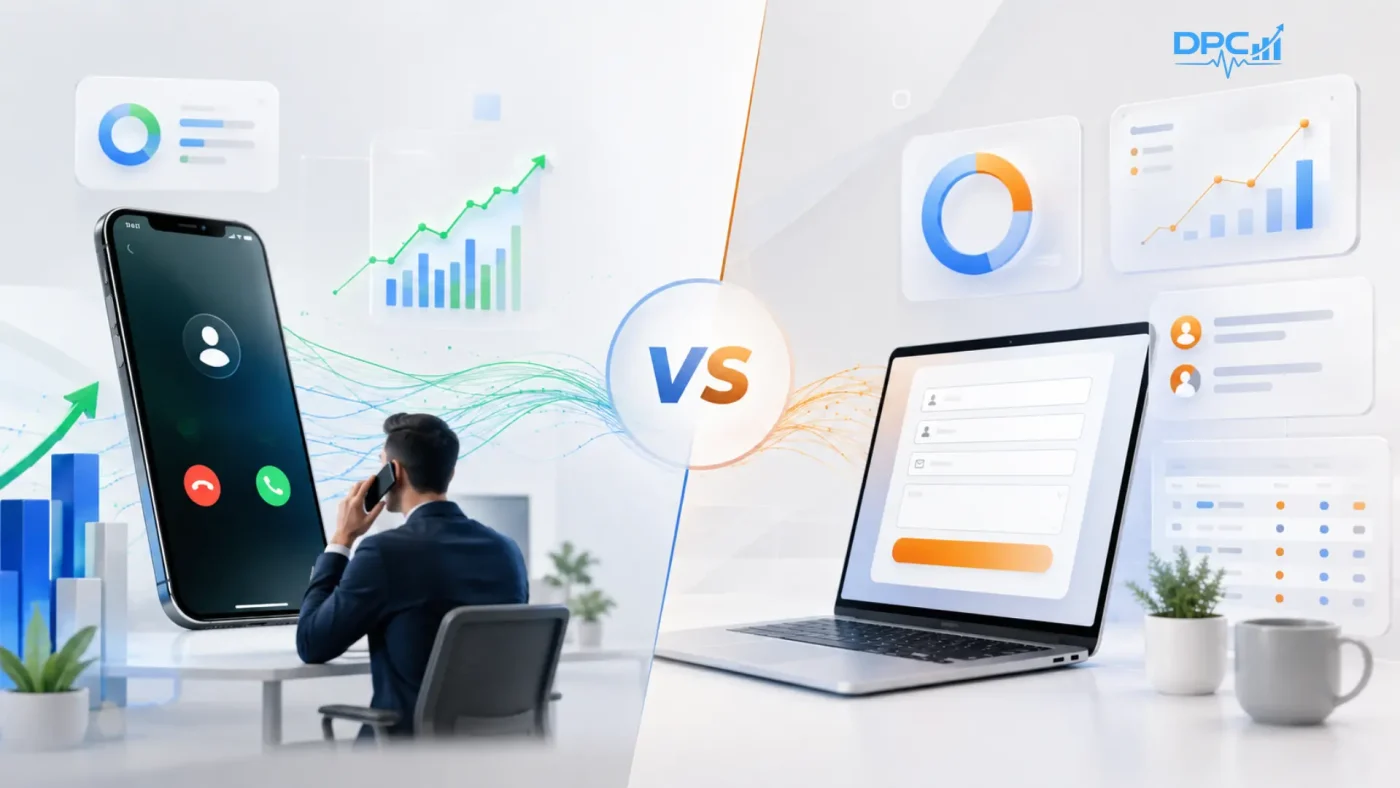
Call leads and form leads aren’t interchangeable versions of the same thing. They come from different buyer mindsets, they need different follow-up systems, and they convert at completely different rates depending on your business.
Call leads come from people who are ready to talk right now. They’re further along in the buying decision, they want an answer fast, and they’ll often call the next competitor if you don’t pick up. Call leads are typically higher intent, but they’re also unforgiving miss the call, lose the lead.
Form leads come from people who want to research on their own terms first. They’re comfortable leaving contact details and waiting for someone to reach out. Form leads give your sales team time to prepare, but they also convert at a lower rate because a portion of them are just browsing, comparing, or not ready to commit.
Neither is “better.” Each one demands a different operational setup on your end.
Ask This Before You Pick a Conversion Goal
1. How fast can you actually respond?
If your business can answer the phone during business hours (or has an answering service after hours), call leads will outperform. If your fastest response time to a new form submission is 4+ hours, you’re leaking bookings to whoever calls back first which, for most local service categories, isn’t you.
2. Is your service urgent or considered?
Emergency and same-day services (plumbing, locksmiths, urgent legal consults, AC repair in July) match naturally with call leads. The buyer’s problem exists right now and they want it solved right now.
Considered purchases higher price points, longer research cycles, multi-stakeholder decisions (B2B software, real estate, financial planning) match better with form leads. These buyers want to gather information before a conversation, not have one cold.
3. What’s your average deal value?
Higher deal values can justify a slower, form-based nurture sequence because the payoff per closed deal is large enough to absorb a longer sales cycle. Lower deal values with tight margins usually need the speed and directness of a phone call to make the unit economics work.
4. Who’s actually answering the phone?
Be honest here. If “answering the phone” means a shared inbox and whoever’s free, call leads will underperform no matter how well the campaign is built. The channel only works if the operational side matches it.
The Campaign-Level Differences That Actually Matter
Once you know which lead type fits your business, the campaign build changes in ways that go beyond just picking a conversion action in Google Ads.
For call-lead campaigns:
- Call extensions and call-only ad formats should be prioritized, not treated as an afterthought
- Mobile bid adjustments matter more, since most calls come from mobile
- Landing pages need the phone number visible above the fold, ideally clickable, not buried in a footer
- Ad scheduling should match your actual staffed hours running call ads when no one can answer is wasted spend
- Call tracking with call duration data should feed back into optimization; a 12-second call is not the same conversion as a 4-minute one, even though Google Ads may count them identically by default
For form-lead campaigns:
- Form length becomes a direct lever on both volume and lead quality every additional field trades quantity for a more qualified pool
- Thank-you page tracking and CRM handoff speed matter more than the ad itself; a form lead that sits in an inbox for six hours is functionally a lost lead
- Lead magnets or “book a call” scheduling tools (like a Calendly embed) often outperform a plain contact form, because they remove a step from the buyer’s side
- Remarketing becomes essential, since form-lead buyers are earlier in the decision process and need more touches before converting
What About Running Both?
You can, but not evenly, and not without separating them.
The mistake we see most often is one campaign with both “Call Now” and “Get a Quote” CTAs competing for the same click. This splits intent signals, makes optimization harder for Google’s algorithm, and usually just confuses the visitor about which action to take.
If your business genuinely supports both paths well fast phone response and a form team that follows up quickly run them as separate campaigns or ad groups with distinct landing pages. Let each one optimize toward its own conversion goal cleanly. Then compare cost per lead and, more importantly, cost per closed deal between the two channels after 30-60 days of data. That number, not your gut preference, should decide where the budget shifts.
The Real Metric Isn’t Cost Per Lead
This is where most accounts go wrong, including ones we’ve inherited from other agencies. A campaign optimized purely for cheap leads call or form will hit that target and still lose money, because cheap leads that don’t close are the most expensive thing in your account.
Before locking in a conversion goal, track leads through to close for at least one full sales cycle. You may find that form leads cost 40% more per lead but close at double the rate, making them cheaper per customer. Or you may find the opposite. Either way, that’s the number that should set your bidding strategy, not the raw cost-per-lead metric sitting in the Google Ads dashboard.
Where This Fits in Your Discovery Process
If you haven’t gone through a proper discovery process before launching or auditing a campaign, this decision usually gets made by default whatever conversion action was easiest to set up, or whatever the previous agency happened to configure. That’s how businesses end up paying for call leads they can’t answer, or form leads that sit unread in an inbox.
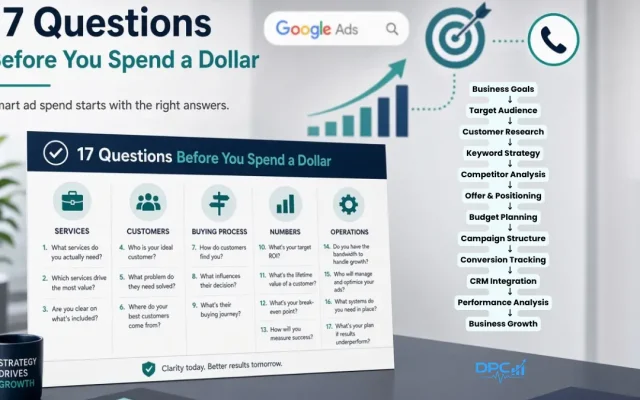
This is exactly the kind of question we walk through in our 17-question client discovery framework before a single campaign gets built because the right conversion goal isn’t a Google Ads setting. It’s a decision about how your business actually operates.
Not sure which lead type your account should be optimizing for? Get in touch and we’ll walk through your sales process before touching a single campaign setting.

Leave a Reply